
A doula is a care professional who supports a pregnant woman and her partner: during pregnancy, during the birth and/or afterwards. She offers emotional, practical and physical support, and is never medically responsible. Don’t have a partner? Then your doula is your anchor: you go through the birth together, and she is part of your support system in the first weeks after birth.
A doula offers tailored guidance. She knows your fears, strengths, pitfalls and wishes, and prepares you both for the birth and the postpartum period. She informs you about all the choices available and offers continuous support: while doctors come and go, she always stays with you as a familiar face during the birth. She doesn’t replace a midwife or doctor, but is a unique addition to your birth team, so that you truly feel seen and supported. In the postpartum period she offers support for longer than maternity care does: for a good landing into parenthood, for the mother’s physical and mental recovery, and for all your baby questions. That’s how you start parenthood with confidence.
differences
differences
The biggest difference between maternity care and a doula is that a maternity nurse is medically trained and therefore also carries out check-ups on mother and baby. Important to know: there is a big difference between maternity care agencies and freelancers. The differences below relate to agencies, as freelancers can work in different ways.
the benefits
i.
II.
A doula helps give you a strong start to parenthood and more often ensures a more positive experience of the birth and the postpartum period.
III.
A doula simply has more time. She isn’t tied to a consultation schedule or to other clients at the same time: you have her full focus.
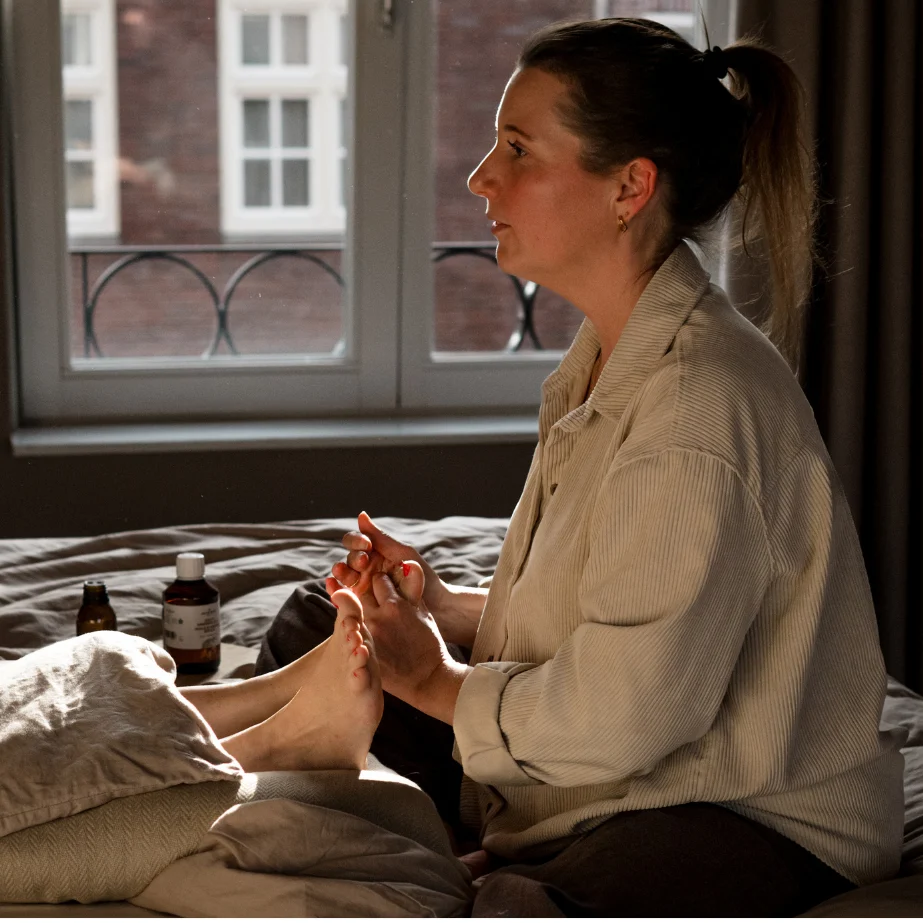
Types of doula
A birth doula supports the pregnant woman and her partner (if she has one) during pregnancy, and offers continuous support during labour. A postpartum doula supports you in the weeks after the birth: the postpartum period, sometimes up to 2 to 3 months afterwards.
Of course there are all kinds of doulas within this field, and that’s a good thing: people are all different. You’ll find doulas who take a grounded approach, and doulas who work holistically and combine both. So yes, there will certainly be doulas who use incense sticks during a birth, but that’s definitely not the standard. The most important thing is that you choose someone who suits you, but do check their knowledge and training too. Many births eventually become medical, so a doula who feels comfortable in that setting and is familiar with talking with the doctors is an advantage.
birth doula
postpartum doula
both
how it works

investment

training
Doula isn’t a protected profession, so in the Netherlands there is no legally required accreditation for doula training. There is, however, a Dutch professional association for doulas, the NBvD, which has its own accreditation policy.
Which training programmes are recognised? These include the doula training at Holos in Utrecht, BiA Doula Training in Amsterdam, the Doula Opleiding at In Bloei in Rotterdam and the Doula Academie in Monnickendam. The Doula Academie is also a CRKBO-registered institution.
As a member of the NBvD, you’re also required to complete continuing professional development every year. Doulas never stop learning.
work area
Think this might be for you, and would you like to speak to a doula? I’d love to get in touch! Choose your place of residence below and read what doula support is available near you.
Want to get to know me better? Do have a look at my about me page too! You’ll find my story and the story behind Mama Thrive there.
Free introduction
A good connection matters. I support you (or both of you) through one of the most special and life changing phases of your life.
Book a free 30 minute introduction call, so we can look together at what you need and whether I’m the right fit.
